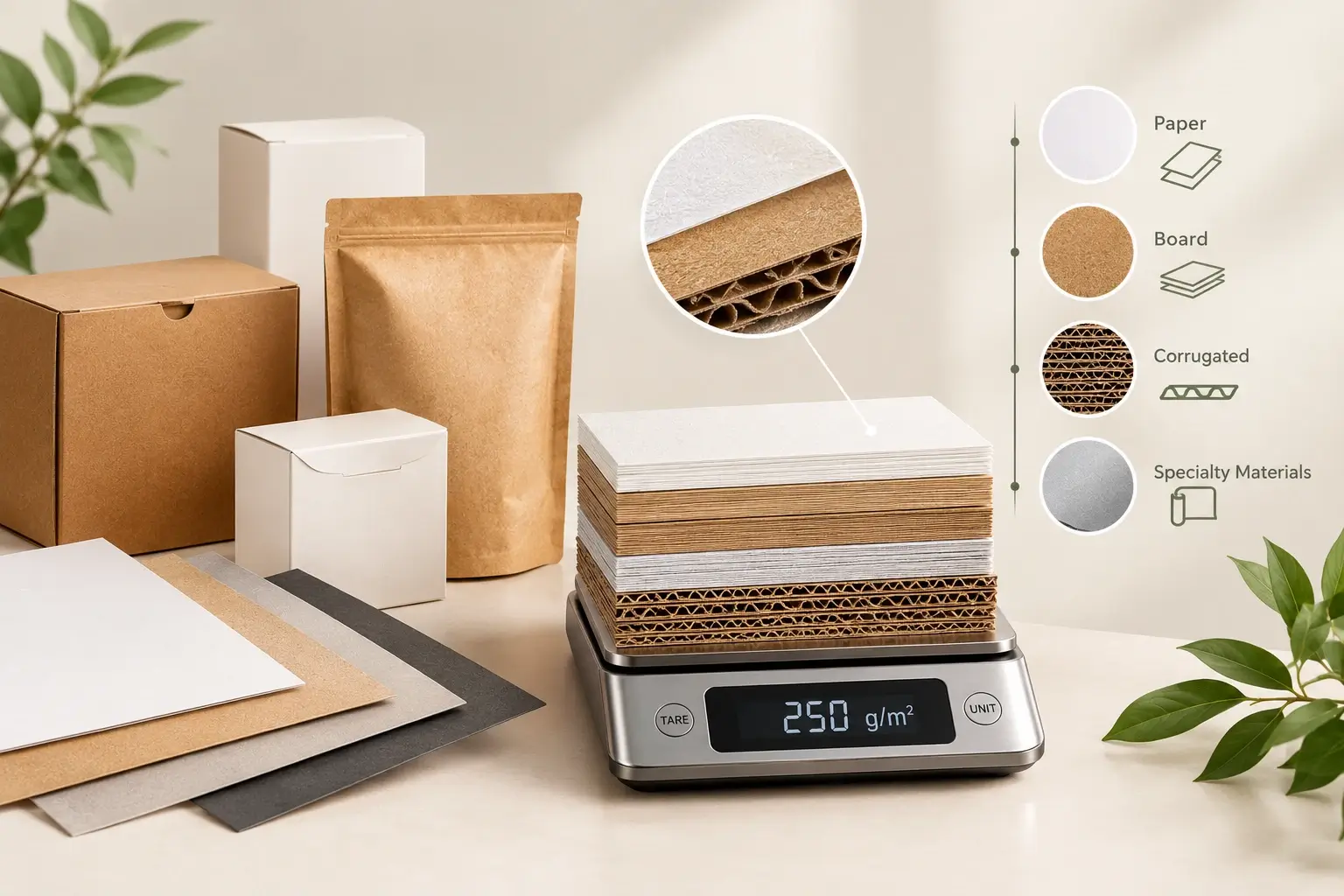
GSM in packaging stands for grams per square meter. It measures how much one square meter of paper, paperboard, or another sheet material weighs. For example, a 300 GSM board weighs 300 grams per square meter.
Mostly packaging suppliers use GSM to communicate about the stock behind tissue, cartons, rigid boxes, and corrugated liners. It gives buyers and printers a common way to compare different materials before they start production.
GSM tells you another thing: that it is weight per area, but it does not confirm how thick a sheet is or how strong a finished box will be.
What Is GSM in Packaging Material?
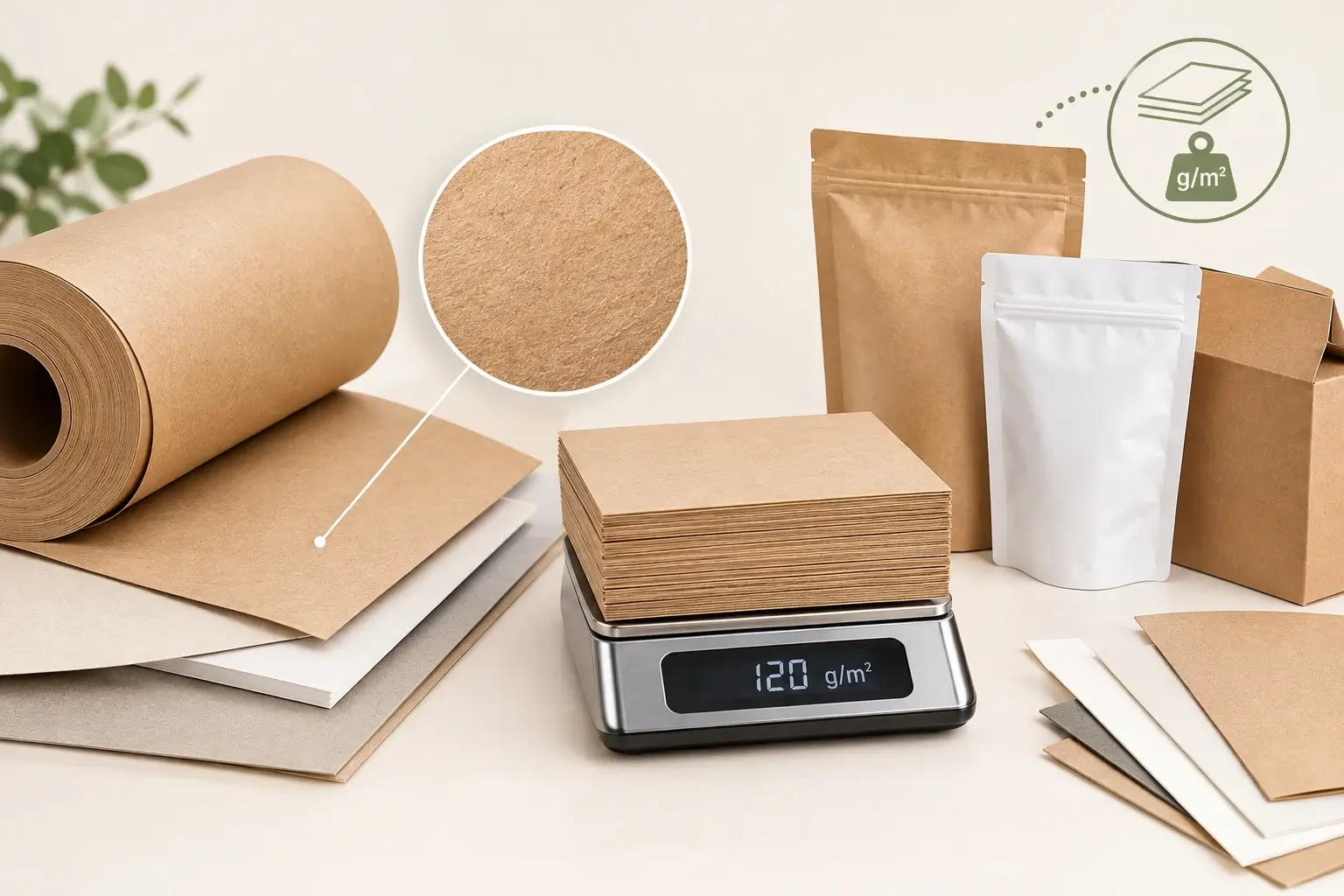
GSM is a simple way to describe how heavy paper or card is. It stands for grams per square meter.
Imagine a sheet of paper one meter on each side. Put it on a kitchen scale. If it weighs 100 grams, it's 100 GSM. If it weighs 300 grams, it's 300 GSM.
GSM isn't the weight of the piece in your hand, though. A single A4 sheet of 80 GSM printer paper weighs about 5 grams. Cut it in half: each half weighs 2.5 grams, but both are still 80 GSM paper. The weight changes with size. The GSM doesn't.
The higher the GSM number, the heavier the paper feels:
-
100 GSM is slightly heavier than everyday printer paper. It bends easily, so it suits wrapping, lining boxes, and printed inserts.
-
300 GSM feels like a thick greeting card. It keeps its shape, so it suits product boxes, sleeves, and tags.
Packaging companies use GSM because everyone reads the number the same way. If two suppliers offer a 350 GSM board, you know you're comparing the same material. The same rule applies to boxes: a 350 GSM box doesn't weigh 350 grams. You'll also see GSM on towels and t-shirts, where it means the same thing.
How Do You Calculate GSM in Packaging?
To find GSM, you need two things: how much an equal piece weighs and how big it is. Then divide the weight by the size:
GSM = weight of your piece (in grams) ÷ size of your piece (in square metres)
You don't need a giant sheet. A small square works:
-
Cut a square that is 10 cm × 10 cm. That's about coaster size.
-
Weigh it in grams. Say it reads 3 grams.
-
Multiply by 100. Why? Because 100 of these little squares fit into one square meter.
So 3 × 100 = 300 GSM.
Paper is light, so use a small jewelry scale, not a kitchen one. If your piece is too small to cut a square, weigh the whole piece and divide by its size in square meters.
When you are ordering suitable packaging for your product, your trusted packaging manufacturer will list the GSM on the quote and help you to understand it better.
GSM vs Thickness and Strength
GSM tells you how heavy a sheet is, while thickness tells you how deep it is, from front to back. In typical packaging language, they refer to thickness as "caliper."
Most of the time, heavier paper is also thicker. In one common white card used for boxes, called an SBS cardboard, 300 GSM is about 0.41 mm thick, and 400 GSM is about 0.61 mm thick. So a 400 GSM card is thicker than a 300 GSM card of the same kind.
But this rule only works when you compare the same kind of paper. Some paper is packed tight, like a squished sponge. Some is loose and fluffy.
For example, 300 GSM glossy paper is about 0.27 mm thick, while 300 GSM box card is about 0.41 mm. Same weight, different thickness. This was all about GSM, but when it comes to strength, there are other factors to consider. A heavier sheet does not always make a stronger box. A lot of it depends on paper type, box shape, how it is folded, and the glue.
Shipping boxes even get their own crush test called ECT (Edge Crush Test), which checks how much pressure a box can withstand before it collapses.
|
Measurement |
What it tells you |
Units you'll see |
|
GSM |
How heavy the sheet is |
g/m² |
|
Thickness (caliper) |
How thick the sheet is |
mm, microns, pt, mil |
|
Stiffness |
How much it resists bending |
Taber units, mN |
|
Strength |
How much pressure it takes before crushing or bursting |
ECT and BCT |
Points, Pounds, and Other Units Used With GSM
GSM is used almost everywhere. For better understanding, packaging experts also use points and pounds. Bags of all types and corrugated shipping boxes have different criteria of measurements.
Points (pt) measure thickness, not weight. One point is one-thousandth of an inch, thinner than a human hair. So you can only roughly match points to GSM. For example, a 16 pt box card is about 300 GSM, and a 18 pt is about 325 GSM.
Pounds (lb) are trickier. US paper is weighed in packs of 500 sheets, and the sheet size changes by paper type. So "100 lb" can mean two things. 100 lb text paper (like a flyer) is about 148 GSM. 100 lb cover paper (like a postcard) is about 270 GSM.
|
Unit |
What it measures |
Where you'll see it |
|
GSM (g/m²) |
Weight |
Paper and card, worldwide |
|
lb basis weight |
Weight of 500 sheets |
US paper and cardstock |
|
lb liner weight |
Weight per 1,000 sq ft |
US shipping box layers |
|
pt |
Thickness |
US product boxes |
|
mm or microns |
Thickness |
Rigid boxes, international quotes |
|
mil |
Thickness |
Plastic and mylar bags |
|
ECT / BCT / burst (psi) |
Strength |
Shipping boxes |
|
Flute (B, C, E, F) |
Wavy middle layer size |
Shipping boxes |
GSM Across Different Packaging Materials
“Cardboard” covers lots of materials, so it has no single GSM. A thin product box starts around 230 GSM, while a gift box's thick board can pass 1,000 GSM. Here's each type and its starting thickness range.
Paper and Tissue
This is the thin, soft paper that wraps, lines, and protects. Tissue paper is usually 17 to 30 GSM. It's light enough to fold around a T-shirt without adding bulk. Wrapping paper around 35 to 40 GSM protects heavier items. For custom wax papers, GSM decides how the sheet feels, while the coating keeps grease out.
Paperboard for Folding Cartons
Paperboard is the stiff card in shop-shelf boxes, like cereal or retail boxes. Most of these use boards between 12 pt (about 233 GSM) and 24 pt (about 407 GSM). A light lip balm can sit in a thinner board. A heavy glass jar needs thicker board so the box doesn't bend. That's why cosmetic boxes and tuck end boxes are quoted in both GSM and points.
Greyboard for Rigid Boxes
Ever opened a phone box or fancy gift boxes? Its stiff walls are greyboard. A 1000 GSM greyboard is about 1.5 to 1.7 mm thick. Box makers usually quote it in millimeters: 1.5, 2, or 2.5 mm. A printed paper wrapped around it gives custom rigid boxes their solid, premium feel.
Corrugated Board
Corrugated board is what most delivery boxes are made from. Peel one apart, and you'll see two flat sheets with a wavy layer in between.
Each layer has its own weight, so one GSM number can't describe the whole board. In the US, the flat sheets are often 26 lb (about 127 GSM), 33 lb (161 GSM), or 42 lb (205 GSM). Single-wall corrugated boxes suit most online orders, while double-wall boxes carry heavier loads.
Plastic Films and Mylar Bags
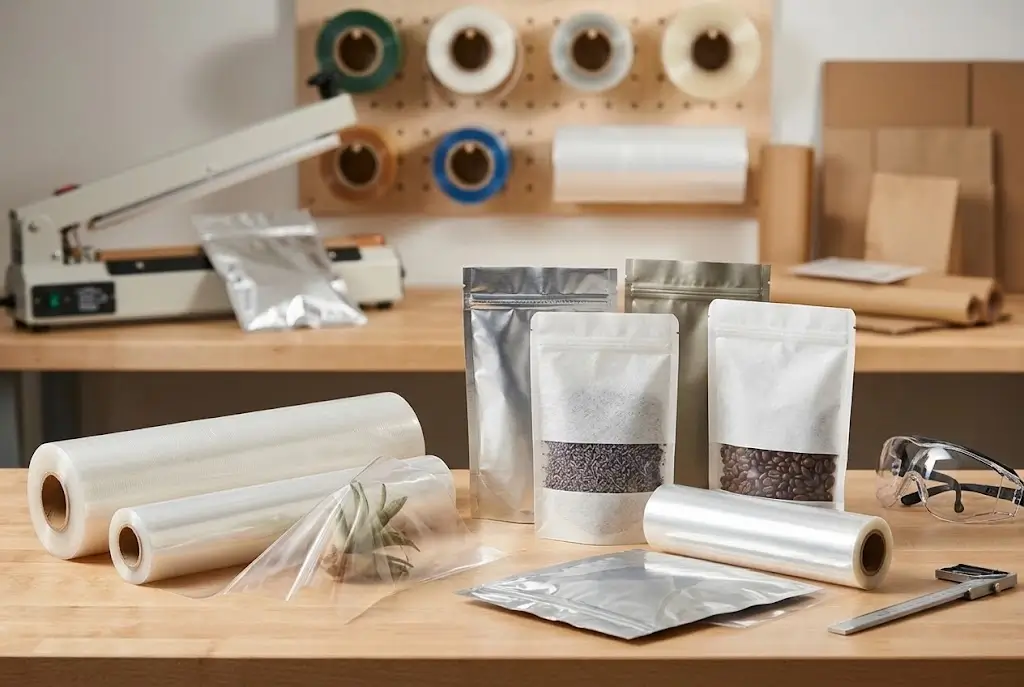
GSM rarely applies to plastic. Bags are measured by thickness in mil or microns. One mil is about 25 microns, thinner than a sheet of printer paper. Custom mylar bags usually range from 3.5 to 7 mil. A detailed guide on flexible packaging will explain how each layer of mylar bag works and protects what’s inside.
What GSM Is Best for Packaging Boxes?
There's no single "best" GSM that works for every box. It depends on what you're packing, the box type, and where it's going. Start here:
|
Packaging type |
What to think about |
Typical spec |
|
Tissue and wrapping paper |
How soft it is, how easily it tears |
17–30 GSM |
|
Folding cartons |
Product weight, box shape |
12–24 pt (about 230–400 GSM) |
|
Rigid boxes |
Board thickness, wrap paper |
1.5–2.5 mm greyboard |
|
Corrugated shipping boxes |
Wavy layer, product weight, the journey |
32 ECT single wall is common |
|
Mylar and film bags |
Freshness, shelf life |
3.5–7 mil |
Treat these as starting points, not fixed rules.
For retail shelves, cardboard boxes around 16 to 18 pt give a crisp, printable surface for cosmetics, candles, and supplements. Luxury items such as jewelry, perfume, and gift sets usually move to rigid boxes, where board thickness sets the feel.
Food packaging adds another layer: food-contact coatings and grease resistance. Bakery boxes often use food-grade paperboard, while custom food boxes for takeaway or frozen goods may need coated or corrugated board.
For shipping, the ECT rating matters more than any GSM figure. A 32 ECT single wall box covers most everyday parcels, while heavier items step up to 44 ECT or a double wall board.
How to Choose the Right GSM for Your Packaging
Choosing the right box with a suitable GSM requires some expert guidance and a clear goal of what this box will be used for
-
Product weight and size: Big boxes need more support, even if what's inside is light.
-
Purpose: A shelf box must look good. A shipping box must survive bumps.
-
Box style: The same GSM acts differently in different styles because there are different types of boxes available in different materials and purposes.
-
Printing and finishing: Shiny coatings, foil, and neat folds all look best on the right card.
-
Cost and shipping: Heavier card costs more and makes parcels heavier to post. But a cheap, thin card can cost more in the end if products arrive broken.
-
Testing: Ask for a sample, put your product inside, and see how it holds up.
Before you place an order, ask your supplier for:
-
The type of material, such as white card, kraft, greyboard, or corrugated
-
The GSM and the thickness
-
How the box is built, such as single or double wall
-
A sample you can test
Not sure where to start? Share your product's size and weight with the HOF Pack team, and we'll suggest the right material for it.
Why Higher GSM Isn't Always Better
It's easy to think a bigger number means a better box. A 300 GSM card does feel thicker and more premium than 200 GSM. But that only helps if your product needs it. An extra card adds cost and weight, and a very thick card can crack when it's folded. If your box is bigger and you think your product will move inside it, you might need fillers that will cost you more.
Picture a 350 GSM product box next to a corrugated mailer box made from 127 GSM sheets. On paper, the product box has the bigger number. But send both through the post, and the mailer protects far better. Its wavy middle layer works like a cushion.
GSM numbers only compare fairly within one material type. Higher GSM makes sense when your product is heavy, the box is large or it must stand on a shelf for weeks without bending.
The rule: pick the right material for the job first, then test it with a sample.
HOF Pack Team
Custom Packaging Experts at HOF Pack